
How to Prepare for PPSC One-Paper Test in 30 Days: Complete Day-Wise Roadmap
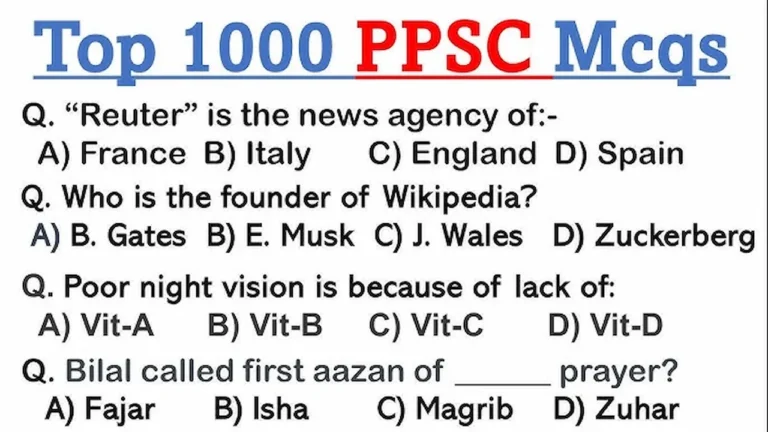
The PPSC One-Paper Test is a competitive written examination conducted by the Punjab Public Service Commission (PPSC) for various government posts in Punjab, Pakistan. It is a single standardized paper that typically consists of 100 Multiple Choice Questions (MCQs) covering subjects like English, Urdu, Islamic Studies, Pakistan Studies, General Knowledge, Current Affairs, Everyday Science, and Basic Mathematics. The test is designed to assess a candidate’s general intelligence, academic knowledge, and awareness of national and global affairs.
Preparing for the PPSC One-Paper Test can feel overwhelming, especially when you are staring at a vast syllabus with no clear direction. The good news is that with the right 30-day study plan, you can cover the entire syllabus systematically, revise smartly, and walk into the examination hall with full confidence.
Thousands of candidates appear in PPSC exams every year, but only those who follow a structured, consistent preparation strategy manage to clear the merit. Whether you are a fresh graduate or a working professional, this day-wise roadmap is designed to help you make the most of every single day without wasting time or energy on irrelevant content.
This guide is your complete answer to one question: How do I prepare for PPSC in 30 days?
Why a 30-Day Plan Works for PPSC
Most candidates fail not because of lack of knowledge, but because of poor planning. A 30-day focused plan forces you to:
- Prioritize high-weightage topics first
- Avoid last-minute panic and random reading
- Build consistent daily habits that stick
- Revise multiple times before the exam day
- Track your weak areas and fix them in time
The human brain retains information better when learning is spaced, repeated, and structured — and that is exactly what this plan delivers.
Week 1 (Day 1–7): Foundation Building
The first week is all about understanding the syllabus and covering the two most scoring subjects — English and Islamic Studies.
Day 1–2: English Grammar and Vocabulary Start with parts of speech, tenses, active/passive voice, direct/indirect speech, and synonyms/antonyms. Use PPSC past papers to identify repeated question patterns. English typically carries 15–20 marks, so invest time wisely here.
Day 3–4: Islamic Studies Cover the fundamentals — Pillars of Islam, Holy Quran facts, Hadith basics, Islamic history, and battles of early Islam. This section is highly predictable and largely repeats from past papers.
Day 5–6: Pakistan Studies Study the Pakistan Movement, key leaders (Quaid-e-Azam, Allama Iqbal, Sir Syed Ahmad Khan), Constitution of 1973, geography of Pakistan, and important rivers, dams, and provinces.
Day 7: Revision + Past Paper Practice Spend the entire day revising Week 1 topics and attempt at least one past paper from mcqsdrive.com to measure your understanding.
Week 2 (Day 8–14): Core Subject Coverage
In the second week, shift your focus to General Knowledge, Current Affairs, and Everyday Science — three subjects that together carry around 40% of the total marks.
Day 8–9: General Knowledge Cover world geography, international organizations (UN, WHO, IMF, World Bank), world records, famous personalities, and scientific inventions. Keep a notebook for quick facts.
Day 10–11: Current Affairs Read the last 6–12 months of current events. Focus on:
- National political developments
- CPEC and economic updates
- International relations involving Pakistan
- Awards, appointments, and summits
- Sports achievements (especially cricket)
Day 12–13: Everyday Science This section tests basic scientific concepts from Biology, Chemistry, and Physics. Focus on the human body, common diseases, vitamins, planets, chemical symbols, and environmental science. Do not go deep — PPSC tests surface-level understanding here.
Day 14: Full Mock Test Attempt a complete 100-MCQ mock test under real exam conditions (90 minutes). Analyze your score, identify weak areas, and note down topics that need more attention in Week 3.
Week 3 (Day 15–21): Weak Areas + Urdu and Math
By now, you know which subjects are pulling your score down. Week 3 is about strengthening weaknesses while also covering remaining subjects.
Day 15–16: Urdu Language Revise Urdu grammar — mubtada, khabar, isam, fail, harf, and punctuation rules. Practice Urdu comprehension passages and common literary figures like Mirza Ghalib, Allama Iqbal, and Faiz Ahmed Faiz.
Day 17–18: Basic Mathematics / Arithmetic PPSC Math is elementary but requires practice. Cover:
- Percentages and ratios
- Profit and loss
- Simple and compound interest
- Basic algebra
- Time, speed, and distance
Practice 20–30 MCQs daily from this section. Speed matters here.
Day 19–20: Revisit Weak Subjects Go back to the topics you scored poorly on in Week 2’s mock test. Re-read notes, do targeted MCQ practice, and quiz yourself.
Day 21: Speed and Accuracy Practice Attempt 50 mixed MCQs in 30 minutes. The goal is not just accuracy but building exam-day speed.
Week 4 (Day 22–28): Intensive Revision
The final week before the exam is revision week — no new topics, only reinforcement.
Day 22–23: Full Syllabus Notes Review Go through all the short notes you made during Weeks 1–3. Read quickly, highlight key facts, and refresh your memory on dates, names, and numbers.
Day 24–25: Past Papers Marathon Solve at least 3–4 previous PPSC One-Paper Tests back to back. Focus on:
- Identifying repeated question patterns
- Noting which topics appear most frequently
- Understanding PPSC’s preferred question style
Day 26–27: Subject-Wise MCQ Blitz Do 50 MCQs per subject on the subjects you feel least confident about. Use the MCQ bank at mcqsdrive.com for categorized, topic-wise practice.
Day 28: Timed Full Mock Test Sit for one last full mock test under strict exam conditions. This is your dress rehearsal. Evaluate your result honestly and spend the next day fixing any remaining gaps.
Day 29–30: Final Preparation
Day 29: Light Revision Only Do not study new content. Review only your short notes, important facts, and tricky MCQs you got wrong earlier. Keep the revision light and confidence-focused.
Day 30 (Exam Day):
- Wake up early, stay calm, and eat a proper breakfast
- Carry your CNIC, admit card, and necessary stationery
- Read each MCQ carefully — do not rush
- Attempt easy questions first, then return to harder ones
- Avoid guessing blindly if there is negative marking
Smart Tips to Maximize Your PPSC Score
- Use mcqsdrive.com daily for free topic-wise MCQ practice and past papers
- Revise each subject at least 3 times during the 30-day period
- Keep a “mistake notebook” — write down every MCQ you get wrong and why
- Study 2–4 hours daily consistently rather than 10 hours randomly
- Avoid social media during study hours — distraction is the biggest enemy of PPSC preparation
Frequently Asked Questions (FAQs)
Q: Can I crack PPSC One-Paper Test in 30 days?
Yes, absolutely. With a focused, structured plan and 3–4 hours of daily study, 30 days is sufficient to cover the full syllabus and revise thoroughly.
Q: Which subject has the most marks in PPSC One-Paper?
General Knowledge, Current Affairs, and Pakistan Studies typically carry the highest combined weightage.
Q: Where can I practice PPSC MCQs online for free?
You can practice thousands of categorized, subject-wise PPSC MCQs for free at mcqsdrive.com.
Q: How many times should I revise before the PPSC exam?
Ideally, revise each subject at least 3 times — once during the study phase, once mid-plan, and once during the final revision week.
Conclusion
Clearing the PPSC One-Paper Test is not about studying harder — it is about studying smarter. This 30-day roadmap gives you a clear, actionable path from Day 1 to Exam Day. Follow it consistently, practice MCQs daily on mcqsdrive.com, revise regularly, and trust the process.
Your government job is 30 days away. Start today.