200 Everyday Science MCQs Every PPSC Aspirant Must Memorize (Solved + Explained)
If you are preparing for PPSC (Punjab Public Service Commission) exams, Everyday Science is one subject you simply cannot ignore. Whether you are appearing for a BS-16 or BS-17 post, this section appears in almost every general knowledge paper with a significant weightage. The good news? It is one of the most scorable sections if you prepare the right way.
The problem most aspirants face is not lack of effort it is lack of direction. They study randomly without knowing which topics are repeated year after year. This guide fixes exactly that. Here, you will get a structured breakdown of the 200 most important Everyday Science MCQs, fully solved and explained, so you remember both the answer and the reason behind it.
What Is Everyday Science in PPSC Context?
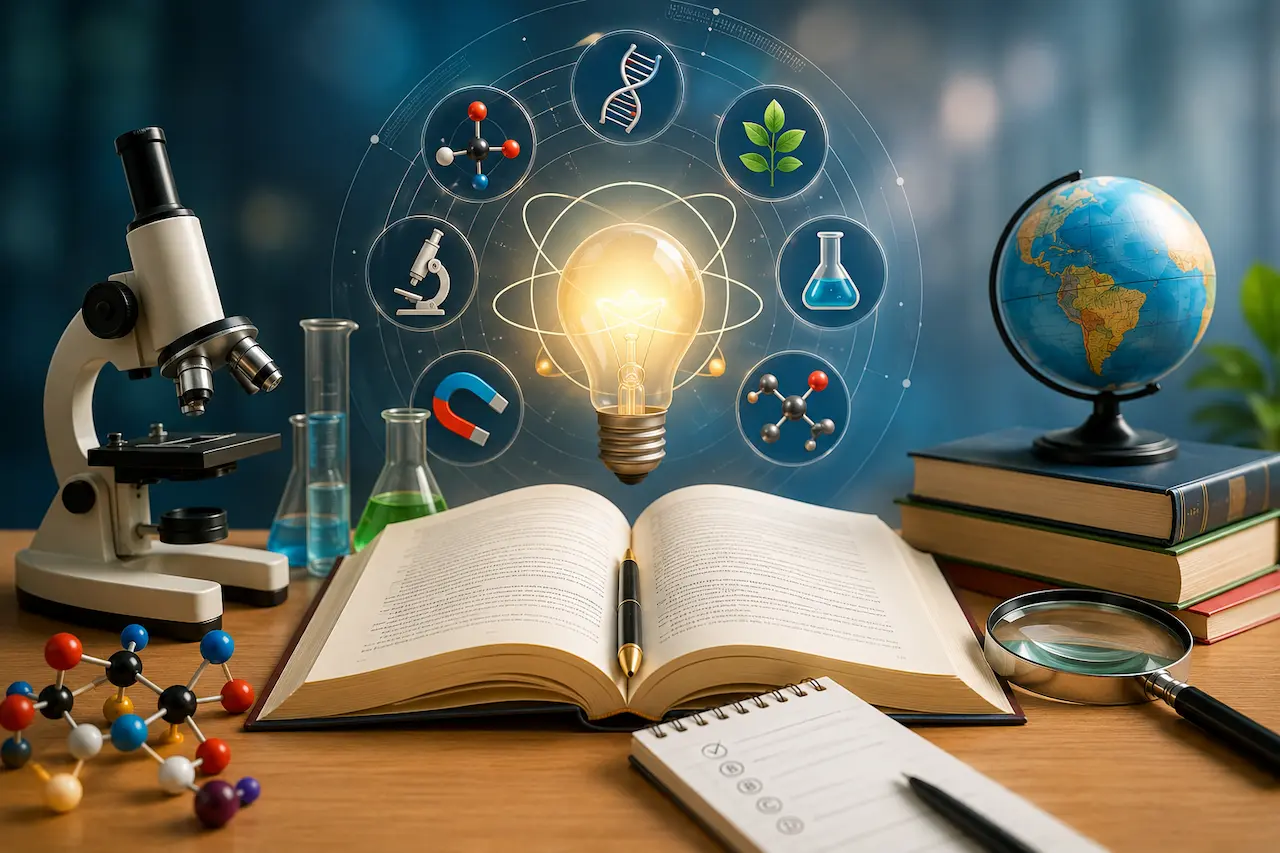
Everyday Science in PPSC papers refers to basic scientific knowledge that applies to daily life. It is not advanced physics or molecular biology. It is the science you see, use, and experience every day — from why the sky is blue to how vaccines work.
PPSC tests this subject to measure whether a candidate has a functional understanding of the world around them. The questions are mostly objective, straightforward, and pulled from a fixed pool of recurring topics.
Core Topics Covered in These 200 MCQs
The 200 MCQs in this collection are not random. They are carefully selected from past PPSC papers and model papers to reflect the actual exam pattern. Here are the major categories covered:
- Human Body & Biology — blood groups, organs, bones, vitamins, diseases
- Physics Basics — light, sound, electricity, force, motion
- Chemistry Fundamentals — elements, compounds, acids, gases
- Earth & Space Science — planets, atmosphere, oceans, seasons
- Environmental Science — pollution, ozone layer, global warming
- Inventions & Discoveries — who invented what and when
- Food & Nutrition — deficiency diseases, nutrients, calories
- Technology & Everyday Devices — how common tools and machines work
Each MCQ is followed by a short explanation so you understand the concept, not just memorize the answer blindly.
Sample MCQs with Explanations (From the Collection)
Here is a preview of the type of questions included in this set, along with their explanations:
Q: Which vitamin is produced when skin is exposed to sunlight? Answer: Vitamin D Explanation: Sunlight triggers the synthesis of Vitamin D in the skin. Its deficiency causes rickets in children and osteomalacia in adults.
Q: What is the chemical formula of water? Answer: H₂O Explanation: Water is made of two hydrogen atoms and one oxygen atom. This is one of the most basic chemistry facts tested in every competitive exam.
Q: Which planet is known as the Red Planet? Answer: Mars Explanation: Mars appears red due to iron oxide (rust) on its surface. It is the fourth planet from the Sun.
Q: What is the normal human body temperature? Answer: 98.6°F or 37°C Explanation: This is the standard average temperature of a healthy adult human body. Fever is generally defined as a temperature above 100.4°F (38°C).
Q: Which gas is most abundant in Earth’s atmosphere? Answer: Nitrogen (78%) Explanation: Nitrogen makes up approximately 78% of the atmosphere, followed by oxygen at 21%. Many candidates confuse this with oxygen.
These are just 5 examples. The full collection of 200 follows the same format — question, answer, and a clear explanation in plain language.
How to Memorize 200 MCQs Without Getting Overwhelmed
Memorizing 200 MCQs sounds like a lot, but with the right strategy it is completely manageable. Here is a method that works for most PPSC aspirants:
Break it into daily sessions. Do not try to cover all 200 in one sitting. Divide them into sets of 20-25 per day. In 8-10 days, you will have covered everything once.
Use active recall. Read the question, cover the answer, and try to recall it. This technique forces your brain to retrieve information, which builds stronger memory than passive reading.
Focus on the explanation, not just the answer. When you understand why something is true, you are far less likely to forget it. The explanations in this collection are written to make that process easy.
Revise every 3rd day. Spaced repetition is scientifically proven to improve long-term retention. After your first pass, revisit each set after a 3-day gap, then again after a week.
Make a mistake log. Keep a separate notebook for MCQs you get wrong. Review that log daily in the last week before your exam.
Most Repeated Everyday Science Topics in PPSC Papers
Based on past paper analysis, these are the topics that appear most frequently in PPSC Everyday Science sections:
- Vitamins and their deficiency diseases (extremely high frequency)
- Human blood — types, functions, components
- Layers of the Earth’s atmosphere
- Speed of light and sound
- Common chemical elements and their symbols
- The Solar System — planets, moons, distances
- Newton’s Laws of Motion
- Common diseases — causes and affected organs
- Renewable and non-renewable energy sources
- The ozone layer and its importance
If you are short on time, prioritize these areas first. They alone can account for a significant portion of your Everyday Science marks.
Common Mistakes PPSC Aspirants Make in This Section
Many candidates lose easy marks in Everyday Science not because they lack knowledge, but because of avoidable mistakes.
One major mistake is confusing similar-sounding facts. For example, many aspirants confuse Vitamin C (ascorbic acid, prevents scurvy) with Vitamin D (prevents rickets). The explanations in this MCQ collection are specifically designed to highlight these common confusions.
Another mistake is skipping the science section entirely and focusing only on Pakistan Studies or Islamiat. This is a strategic error. Everyday Science questions are predictable and pattern-based, making them easier to prepare for compared to open-ended general knowledge topics.
Finally, many candidates read passively without testing themselves. Reading an MCQ and immediately checking the answer does not build real memory. Always attempt the question first.
Why MCQsDrive.com Is the Best Platform for This Preparation
MCQsDrive.com is built specifically for Pakistani competitive exam aspirants. The platform provides a comprehensive database of solved MCQs across all PPSC, FPSC, NTS, and CSS subjects — including Everyday Science.
What makes it stand out:
- MCQs are sourced from actual past papers
- Each question includes a clear, concise explanation
- The content is regularly updated to match the latest exam patterns
- It is free to access, making quality preparation available to everyone
- The interface is simple and mobile-friendly for studying on the go
For PPSC Everyday Science specifically, MCQsDrive.com offers one of the most well-organized question banks available online. Whether you are a first-time aspirant or retaking the exam, this platform gives you exactly what you need to walk into the exam hall with confidence.
Final Tips Before Your PPSC Exam
In the last few days before your exam, shift from learning mode to revision mode. Stop adding new material and focus on reinforcing what you already know.
Go through your mistake log one final time. Quickly scan all 200 MCQs once more, paying extra attention to the ones you found tricky. Make sure you are clear on the most commonly confused facts — especially in vitamins, atmospheric gases, and planetary science.
On exam day, attempt Everyday Science questions early if possible. Since these are factual and objective, they take less time and help build your confidence before tackling more complex sections.
Science is not a subject to fear — it is a subject to understand. With 200 well-explained MCQs and a smart revision strategy, you are already ahead of most candidates.
Start your preparation today at MCQsDrive.comand give yourself the best chance at clearing your PPSC exam on the first attempt.