How to Crack NTS Test in 30 Days: Step-by-Step Preparation Strategy 2025
Every year, thousands of Pakistani students and job seekers appear in the National Testing Service (NTS) examination. Whether you are preparing for a government job, a scholarship, or university admission, the NTS test is one of the most important assessments you will face in your academic or professional journey.
The good news is that cracking the NTS test in 30 days is completely achievable if you follow a smart, structured, and consistent preparation strategy. Many candidates fail not because they lack knowledge, but because they lack direction. They study without a plan, skip important topics, or waste time on irrelevant material.
In this complete NTS preparation guide, you will get a day-by-day breakdown, subject-wise tips, recommended resources, and proven techniques used by top scorers across Pakistan. Whether you are a fresh graduate or a working professional, this guide is designed to help you pass the NTS test confidently.
What Is the NTS Test and Why Is It Important?
The National Testing Service Pakistan conducts standardized tests for recruitment, admission, and scholarship purposes. Government departments, universities, and organizations like HEC, NESB, and various federal and provincial bodies rely on NTS results to shortlist candidates.
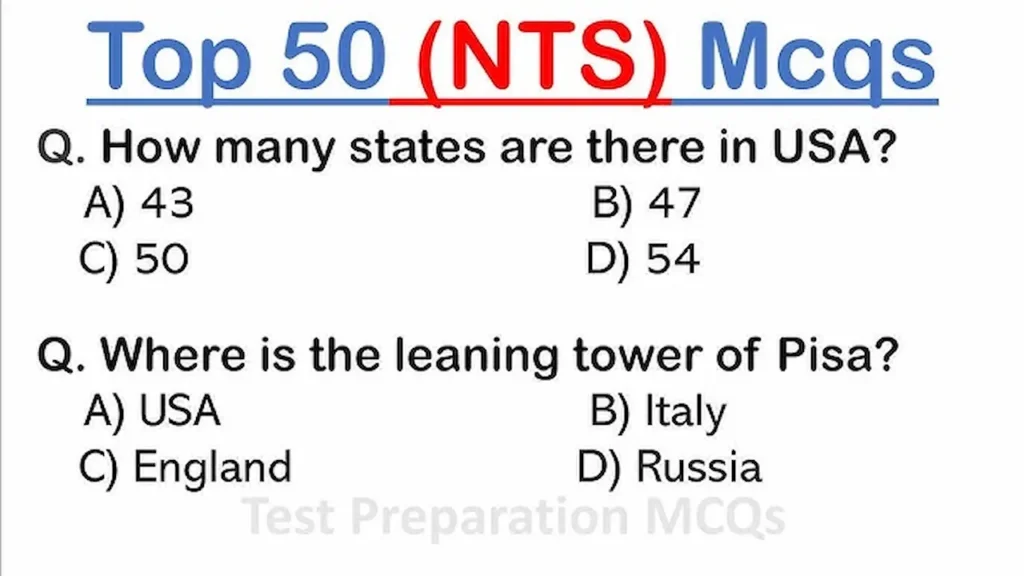
NTS tests generally assess candidates in three major areas: Verbal Ability, Quantitative Reasoning, and Analytical or Subject-Specific sections. Depending on the post or program, the test format and difficulty level can vary.
Scoring well in the NTS exam increases your chances of getting called for interviews, securing scholarships, or gaining admission to top public universities. In competitive scenarios, even a few marks can make the difference between selection and rejection.
Understanding the NTS Test Format Before You Begin Preparation
Before you start your 30-day NTS preparation plan, you need to fully understand the test structure. Jumping into studying without knowing what you are being tested on is one of the biggest mistakes candidates make.
Common Sections in NTS Tests
The NTS test format typically includes the following sections:
Verbal Ability covers English grammar, vocabulary, sentence completion, synonyms, antonyms, reading comprehension, and analogy questions.
Quantitative Reasoning includes basic arithmetic, percentages, ratios, algebra, geometry, averages, and data interpretation questions.

Analytical Reasoning tests logical thinking, pattern recognition, series completion, and critical reasoning.
Subject-Specific MCQs are included in technical or professional posts. For example, an NTS test for a computer operator will include computer science MCQs, while a test for a science teacher will include physics, chemistry, or biology questions.
General Knowledge and Current Affairs sections appear in most NTS tests and cover Pakistan affairs, Islamic studies, world geography, and recent events.
How Many MCQs Are in the NTS Test?
Most NTS tests contain between 80 to 100 multiple choice questions. Each correct answer carries one mark. In many tests there is no negative marking, which means you should attempt every question even if you are unsure. Always confirm the pattern from your official NTS admit card or the advertisement for the specific post.
Why 30 Days Is Enough to Crack the NTS Test
Thirty days is a realistic and sufficient timeframe for NTS preparation if you are disciplined and strategic. The NTS syllabus is not extremely vast compared to exams like CSS or PMS. Most topics are at the intermediate to graduate level and can be covered thoroughly in a month.
The key is focused and consistent effort. Spending 3 to 4 hours every day on the right material, combined with regular practice of past papers and MCQs, will build your confidence and speed significantly.
Students who score 75 percent and above in NTS tests often follow a similar pattern: they study systematically, practice hundreds of MCQs daily, review their mistakes, and spend the final week on revision and mock tests.
30-Day NTS Preparation Plan: Week-by-Week Breakdown
Week 1 (Day 1 to Day 7): Build Your Foundation
The first week is all about understanding the syllabus and building your knowledge base. Do not rush. Focus on learning concepts, not just memorizing answers.
Day 1 and 2: Download the NTS past papers relevant to your specific post or program. Go through two to three past papers to understand what types of questions appear. Make a list of weak areas.
Day 3 and 4: Start with English Verbal Ability. Study grammar rules including tenses, prepositions, conjunctions, active and passive voice, and direct and indirect speech. Learn 20 new vocabulary words daily using a word list or dictionary app.

Day 5 and 6: Begin Quantitative Reasoning. Revise basic math formulas including percentages, fractions, ratios, profit and loss, speed and distance, and averages. If you are weak in math, spend extra time here.
Day 7: Take a diagnostic MCQ test covering all sections practiced so far. Evaluate your score and identify where you need more work.
Week 2 (Day 8 to Day 14): Deep Subject Practice
In week two, you go deeper into all sections and start solving more MCQs topic by topic.
Day 8 and 9: Focus on Pakistan General Knowledge. Study topics like capitals, rivers, provinces, important dates, constitutional articles, and major events in Pakistan’s history. These questions appear in almost every NTS test.
Day 10 and 11: Study Islamiyat MCQs. Cover the basics of Islamic history, names of prophets, Quranic surahs, pillars of Islam, and important events like Ghazwat. These are high-scoring and easy to prepare.
Day 12 and 13: Practice Analytical Reasoning. Work on logical sequences, blood relations, direction problems, and mirror image questions. These questions seem tricky but follow clear patterns once you understand them.
Day 14: Solve one complete NTS past paper under timed conditions. Give yourself 90 minutes. Check your answers, calculate your score, and note every wrong answer.
Week 3 (Day 15 to Day 21): Speed and Accuracy Training
By now you have covered most major topics. Week three is about improving your speed, accuracy, and confidence through rigorous MCQ practice.
Day 15 and 16: Focus entirely on English comprehension passages and sentence correction. Read a passage carefully and answer questions without re-reading the entire passage. This saves time during the actual test.
Day 17 and 18: Revise all math topics again with a focus on word problems. Word problems are commonly found in NTS tests and many candidates lose marks here due to careless reading.
Day 19 and 20: Practice subject-specific MCQs related to your field. If you are applying for a computer-related post, revise MS Office, basic programming, networking, and operating system concepts. For education department posts, focus on pedagogy and teaching methodology MCQs.
Day 21: Take another full-length mock test. This time try to complete it in 80 minutes instead of 90 to build speed.
Week 4 (Day 22 to Day 30): Revision, Mock Tests, and Final Preparation
The last week is dedicated entirely to revision, full-length practice tests, and mental preparation.
Day 22 and 23: Revise all your notes from week one and week two. Pay special attention to areas where you made repeated mistakes. Do not try to learn new topics at this stage.
Day 24 and 25: Solve two complete NTS past papers on these days. Analyze your performance. Aim for at least 70 percent accuracy before the actual test.
Day 26 and 27: Focus on Current Affairs. Read recent events related to Pakistan and the world from the past six months. Make short notes on key facts like appointments, international agreements, sports results, and economic indicators.
Day 28 and 29: Do a light revision of all subjects. Read your short notes. Practice 50 mixed MCQs daily to keep your mind sharp.
Day 30: Rest. Do not study heavy material on the last day. Just review your notes lightly, prepare your stationery and documents, sleep early, and stay calm.
Subject-Wise NTS Preparation Tips for High Scores
English Verbal Ability Tips
English is one of the sections where most candidates lose marks unnecessarily. The vocabulary and grammar questions are very predictable once you practice enough.
Study the most commonly tested synonyms and antonyms in NTS past papers. Words like benevolent, obstinate, ambiguous, tenacious, and eloquent appear repeatedly across different NTS tests.

Practice one reading comprehension passage every day. The trick is to read the questions first and then skim the passage for answers.
For sentence correction, learn the most common grammar errors: subject-verb agreement, pronoun-antecedent agreement, misplaced modifiers, and parallel structure.
Quantitative Reasoning Tips
Many candidates fear math, but NTS quantitative reasoning is based on grade 8 to intermediate level mathematics. It is not advanced calculus.
Focus on percentages, ratio and proportion, profit and loss, simple and compound interest, time and work, speed and distance, and basic geometry. These topics cover 80 percent of the math questions.
Always write down the steps while solving. Do not try to solve everything in your head. Avoid careless mistakes by double-checking calculations.
If time is short, use elimination method. Remove obviously wrong answer choices and pick from the remaining options.
General Knowledge and Pakistan Studies Tips
Prepare a one-page summary of Pakistan’s important facts: area, population, capital, national symbols, provinces and their capitals, major rivers, mountain ranges, and important dams.
Memorize the articles of the Constitution of Pakistan that are most frequently tested: fundamental rights, President’s powers, Parliament structure, and Emergency provisions.
Study the chronological order of events in Pakistan’s history from 1947 onwards. Questions on partition, wars with India, constitutions, and prime ministers appear very frequently.
Islamiyat MCQs Preparation Tips
Islamiyat questions in NTS tests are generally straightforward. Focus on the basics: names of the 25 prophets, Ashra Mubashara, battles of Islam, wives of Prophet Muhammad (PBUH), and important Quranic facts.
Memorize the number of verses, surahs, and ruku in the Holy Quran. Also learn names of Sahaba Karam and their contributions.
Analytical Reasoning Tips
Analytical reasoning questions test your logical thinking. The best way to prepare is through practice. Solve at least 10 analytical reasoning MCQs every day during your 30-day plan.
Common question types include number series, letter series, coding and decoding, blood relations, seating arrangements, and syllogisms. Once you recognize the pattern in each type, they become easy to solve.
Best Resources for NTS Test Preparation
Online Platforms and Websites
MCQsDrive (mcqsdrive.com) is an excellent platform for practicing thousands of MCQs across all NTS-relevant subjects including General Knowledge, Pakistan Studies, Islamiyat, Computer Science, English, Mathematics, and more. The website offers well-organized MCQ categories that match the NTS syllabus perfectly.
Other useful online resources include NTS official past papers available on the NTS website, online quiz platforms, and YouTube channels dedicated to NTS preparation in Urdu and English.
Books for NTS Preparation
Caravan NTS Guide is one of the most widely used books among NTS candidates in Pakistan. It covers all major subjects in a concise format.
NTS by Dogar Brothers is another popular choice, especially for candidates appearing in education department or general tests.
For math, use basic intermediate-level textbooks or NTS-specific quantitative reasoning books available in local bookstores.
Past Papers: The Most Important Resource
Solving NTS past papers is the single most effective preparation strategy. Past papers tell you exactly what topics are repeated, how questions are framed, and what level of difficulty to expect.
Try to collect at least 10 to 15 past papers related to your specific NTS post. Solve them under real exam conditions: no phone, no breaks, and within the allotted time.
Common Mistakes to Avoid During NTS Preparation
Not checking the specific test syllabus for your post is a very common error. NTS tests for different posts have different sections and weightages. Always read the official advertisement carefully.
Skipping past paper practice is another big mistake. Many candidates only read theory and never practice actual MCQ-style questions. Theory without practice leads to poor performance in timed conditions.
Ignoring weak subjects is tempting but dangerous. If you are weak in math, you will lose 20 to 25 percent of marks by avoiding it. Spend more time on weak areas, not just the subjects you already know.
Poor time management during the actual test is one of the top reasons candidates fail. Do not spend more than 60 seconds on any single MCQ. Mark difficult questions and move on. Come back to them later.
Not reading questions carefully causes avoidable mistakes. Always read every word of a question before selecting an answer. Trick questions often have words like not, except, always, or never that change the meaning entirely.
Tips for the Day of the NTS Test
Arrive at the test center at least 30 minutes early. Bring your original CNIC, NTS admit card, and any other required documents. Late entry is often not allowed.
Read all instructions on the answer sheet carefully before starting. Know whether you need to shade answers with an HB pencil or a pen.
Start with the section you are most confident in. This builds momentum and saves time for harder sections.
Do not leave any MCQ unanswered if there is no negative marking. Even a random guess gives you a 25 percent chance of being correct.
Stay calm throughout the test. Anxiety reduces performance. Trust your preparation and focus on one question at a time.
How MCQsDrive Can Help You Ace the NTS Test
MCQsDrive is a comprehensive online MCQ practice platform specifically designed for Pakistani exam aspirants. It offers thousands of MCQs across all subjects relevant to NTS, PPSC, FPSC, CSS, and other competitive exams.
Whether you need General Knowledge MCQs, Islamiyat practice questions, Computer Science MCQs, or Pakistan Current Affairs, MCQsDrive provides well-organized and regularly updated content that aligns with the actual exam patterns.
Using MCQsDrive daily as part of your 30-day NTS preparation plan will significantly improve your accuracy and confidence. The platform is especially useful for testing yourself after studying each topic and identifying areas that need more revision.
Conclusion
Cracking the NTS test in 30 days is not just a dream. It is a practical and achievable goal for any dedicated candidate. The key lies in starting early, understanding the test format, following a structured study plan, practicing maximum MCQs, and reviewing mistakes regularly.
Do not underestimate the power of consistent daily effort. Even 3 to 4 focused hours per day over 30 days adds up to over 100 hours of quality preparation. Candidates who follow a similar strategy consistently score above 70 percent in NTS tests.
Use trusted resources like MCQsDrive for MCQ practice, solve as many past papers as possible, and take care of your physical and mental health during preparation. Stay confident, stay consistent, and success in the NTS test will follow.
FAQs About NTS Test Preparation
How many marks are required to pass the NTS test?
There is no fixed passing score for all NTS tests. The cutoff score depends on the number of applicants and the competition for a specific post. Generally, scoring 60 percent or above puts you in a competitive position, while 70 percent or higher significantly improves your chances of being shortlisted.
Is there negative marking in the NTS test?
Most NTS tests do not have negative marking. However, some specialized tests may include a deduction for wrong answers. Always read the official NTS test instructions carefully to confirm the marking scheme for your specific test.
Can I prepare for NTS test in one month without coaching?
Yes, absolutely. Thousands of candidates successfully crack the NTS test through self-study every year. With the right resources, a structured study plan, and daily MCQ practice on platforms like MCQsDrive, you do not need expensive coaching to pass.
Which subjects are most important for NTS test preparation?
The most important subjects for general NTS tests are English Verbal Ability, Quantitative Reasoning, General Knowledge, Pakistan Studies, and Islamiyat. For technical posts, subject-specific knowledge in your field is also essential.
How many past papers should I solve before the NTS test?
Solving at least 10 to 15 past papers relevant to your specific post is highly recommended. The more past papers you practice, the more familiar you become with the question style, time pressure, and topic weightage.
What is the best website for NTS MCQ practice in Pakistan?
MCQsDrive (mcqsdrive.com) is one of the best platforms for NTS MCQ practice in Pakistan. It covers all major subjects including General Knowledge, Computer Science, Islamiyat, Pakistan Studies, English, and Current Affairs, making it a one-stop resource for complete NTS preparation.
Can current affairs questions appear in every NTS test?
Yes, current affairs questions related to Pakistan and the world appear in most NTS tests. It is important to stay updated on events from the past six months before your test date. Focus on political appointments, international agreements, sports achievements, and major economic developments.