
Why MCQ-Based Learning Is the Most Effective Study Method for Competitive Exams
Let’s be honest for a second. Most students prepare for competitive exams by doing one thing: reading. They read the textbook, re-read their notes, highlight half the page in yellow, and then re-read the highlighted parts. It feels productive. It looks productive. But the results, more often than not, are disappointing.
The problem is not the effort. The problem is the method.
MCQ-based learning, when used correctly, outperforms passive reading in almost every measurable way. This is not opinion. This is backed by decades of research in cognitive psychology. And for competitive exams like PPSC, FPSC, CSS, NTS, and others, it is the single most practical and effective way to study.
Here is why.
Your Brain Does Not Learn by Reading. It Learns by Retrieving.
This is the most important thing to understand about how memory works.
When you read a paragraph, your brain processes the information passively. It creates a weak, surface-level memory trace. That trace fades quickly, especially under the pressure of an exam environment.
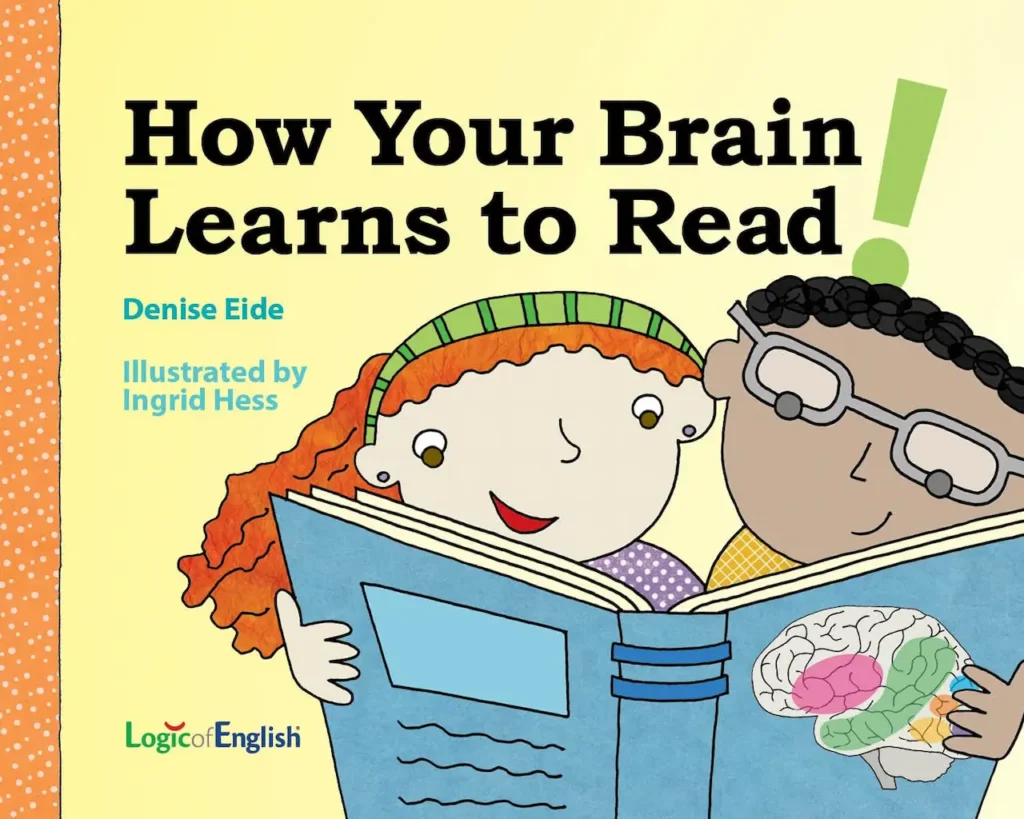
When you answer an MCQ, something completely different happens. Your brain actively searches for the correct answer. It retrieves, compares, and evaluates. That process of retrieval is what strengthens the memory. The more times you retrieve a piece of information, the stronger and more durable that memory becomes.
This is called the Testing Effect, and it is one of the most well-replicated findings in all of cognitive psychology. A landmark study published in Psychological Science by Roediger and Karpicke (2006) found that students who practiced retrieval through testing remembered 50% more information after a week compared to students who spent the same time re-reading. That is not a small margin. That is the difference between passing and failing.
MCQs Force You to Think, Not Just Recognize
There is a common misconception that MCQs are easy because the answer is right there in front of you. You just have to pick one of four options.
That logic completely misunderstands what makes MCQs difficult and effective at the same time.
A well-written MCQ does not just test whether you have seen a fact before. It tests whether you actually understand it. The wrong answer options, called distractors, are specifically designed to trip up candidates who have surface-level knowledge. If you only half-understand something, a good distractor will catch you every time.
This is exactly why competitive exams use the MCQ format. It efficiently separates candidates who genuinely know the material from those who just vaguely remember reading it somewhere.
The Speed Advantage Nobody Talks About
Competitive exams are timed. Brutally timed.
In most PPSC and FPSC tests, candidates have between 90 minutes to 2 hours to answer anywhere from 100 to 200 questions. That leaves you roughly 45 to 60 seconds per question. In that window, you need to read, think, and answer, all without panicking.

Regular MCQ practice builds mental speed. When you have answered a topic hundreds of times through practice, your brain no longer needs to think from scratch. It pattern-matches. It recognizes the question type, retrieves the stored answer, and moves on. This is not guessing. This is trained speed.
Students who only read textbooks and never practice MCQs often know the material but still fail because they cannot move fast enough under real exam conditions. MCQ practice solves this problem directly.
MCQs Show You Exactly Where You Are Weak
One of the most underrated benefits of MCQ-based study is instant, honest feedback.
When you read a chapter and think you understood it, you rarely know how well you actually understood it. Your brain is surprisingly bad at judging its own knowledge. Researchers call this the illusion of knowing, and it is a major reason why students feel prepared but underperform on exams.
MCQs eliminate that illusion immediately. When you get an answer wrong, you know. There is no ambiguity. That wrong answer is a signal pointing you directly to a gap in your knowledge.
Over time, this feedback loop becomes your most powerful study tool. You practice, identify weak spots, focus on those weak spots, practice again, and watch your accuracy improve. This is a measurable progress system that passive reading simply cannot offer.
Spaced Repetition and MCQs Are a Perfect Match
Spaced repetition is one of the most evidence-based learning strategies in existence. The core idea is simple: review information at increasing intervals over time to lock it into long-term memory.
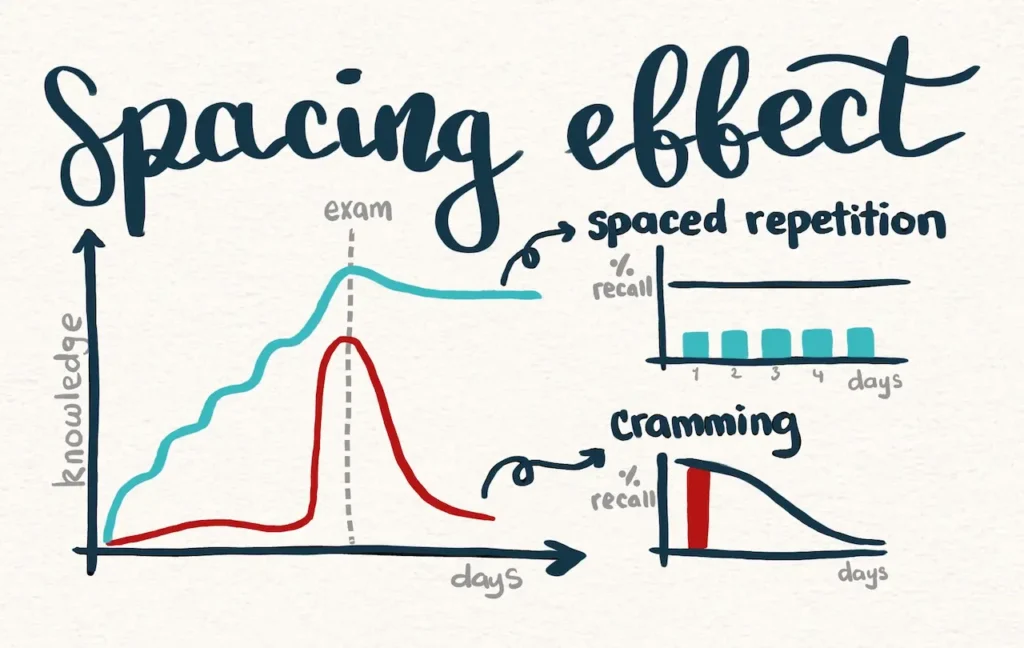
Hermann Ebbinghaus, the 19th-century German psychologist who pioneered memory research, showed that we forget most of what we learn within 24 hours unless we review it. His Forgetting Curve remains one of the most cited findings in educational psychology.
MCQ practice fits perfectly into a spaced repetition system. Instead of reviewing entire chapters, you review specific questions on topics where your memory is fading. Platforms that organize MCQs by subject and topic make this especially easy. You can revisit Pakistan Studies MCQs on Monday, Islamiyat MCQs on Wednesday, and General Knowledge MCQs on Friday, giving each topic just enough review to keep it fresh without wasting time on things you already know well.
MCQ Practice Reduces Exam Anxiety
This one is psychological but deeply practical.
Exam anxiety is real, and it affects performance significantly. A major cause of exam anxiety is unfamiliarity with the exam environment. When everything feels new and high-pressure on exam day, your brain interprets that as a threat, and performance drops.
Regular MCQ practice under timed conditions creates familiarity. When you have sat through 30 or 40 mock tests before the actual exam, exam day feels less like a surprise and more like another practice session. The format is familiar. The time pressure is familiar. Your confidence is higher because you have done this before.
This is why competitive exam toppers almost always report that mock test practice was a central part of their preparation strategy.
Not All MCQ Practice Is Equal
Here is something important to understand. Practicing random, unverified MCQs from unreliable sources can actually do more harm than good.
If you memorize a wrong answer from a poorly written question, you carry that wrong information into the exam. In a field where one wrong answer can cost you the seat, that is a serious risk.
This is why the quality of your MCQ source matters as much as the quantity of your practice. Use platforms that organize content by subject, ensure answer accuracy, and align with actual exam syllabuses. MCQsDrive covers subjects like General Knowledge, Pakistan Studies, Islamiyat, English, Everyday Science, Urdu, Maths, Computer Science, and many more, all structured so that you are practicing the right content in a focused, organized way.
Quality practice on a trusted platform is far more valuable than hundreds of MCQs from scattered, unverified PDFs.
How to Actually Use MCQs the Right Way
Knowing that MCQs are effective is one thing. Using them effectively is another.
Start by practicing topic-wise. Do not jump randomly between subjects. Pick one topic, go deep on it with MCQs, and then move on. This builds solid foundations rather than scattered, surface-level knowledge.

Always review wrong answers. Do not just note that you got something wrong. Read the explanation, understand the correct answer, and then revisit that question two or three days later to confirm the correction stuck.
Simulate exam conditions at least once a week. Set a timer, use no notes, and treat it like the real thing. This builds both speed and mental resilience.
Track your accuracy over time. If your accuracy on Pakistan Studies MCQs was 60% three weeks ago and is now 75%, that is measurable progress. Tracking keeps you motivated and shows you whether your current study method is actually working.
The Bottom Line
Passive reading gives you the feeling of studying. MCQ-based learning gives you the actual results.
For competitive exams where thousands of candidates are competing for a handful of seats, the method you use matters enormously. MCQs build active recall, improve speed, expose weaknesses, reduce exam anxiety, and align perfectly with how human memory actually works.
The science supports it. The toppers swear by it. And when you try it properly, your own results will confirm it.
Stop just reading. Start retrieving. That is where real exam preparation begins.
FAQs
Q1: Is MCQ-based learning better than reading textbooks for competitive exams?
Yes, research consistently shows that MCQ-based learning is more effective than passive reading for exam preparation. Active retrieval through MCQ practice strengthens memory significantly more than re-reading. A study by Roediger and Karpicke (2006) found that retrieval practice leads to up to 50% better retention after one week compared to repeated reading.
Q2: What is the Testing Effect and why does it matter for exam prep?
The Testing Effect is a well-established finding in cognitive psychology showing that retrieving information through practice tests strengthens memory far more effectively than re-studying the same material. For competitive exam candidates, this means regular MCQ practice builds stronger, longer-lasting recall than reading notes repeatedly.
Q3: How many MCQs should I practice daily to prepare for competitive exams?
A daily target of 50 to 100 MCQs is practical for most competitive exam candidates. The exact number matters less than consistency and quality of review. Always spend time understanding why you got a wrong answer wrong. That review process is what actually builds your knowledge over time.
Q4: Can MCQ practice help reduce exam anxiety?
Yes. Regular MCQ practice under timed conditions familiarizes your brain with the exam environment. The more you simulate real exam pressure during preparation, the less threatening it feels on actual exam day. Most high-scoring candidates report that regular mock test practice significantly reduced their anxiety going into the real test.
Q5: What subjects should I focus on for MCQ practice in PPSC and FPSC exams?
For PPSC and FPSC, the core MCQ subjects include General Knowledge, Pakistan Studies, Islamiyat, English, Everyday Science, Current Affairs, Urdu, and Maths. Some posts also require subject-specific MCQs. Platforms like MCQsDrive organize all these subjects in one place so you can practice efficiently without jumping between scattered sources.
Q6: What is spaced repetition and how does it work with MCQ practice?
Spaced repetition is a learning technique where you review material at increasing time intervals to counter natural forgetting. For MCQ practice, this means revisiting topics you struggled with after one day, then three days, then a week. This approach, grounded in Ebbinghaus’s Forgetting Curve research, dramatically improves long-term retention compared to single-session cramming.